
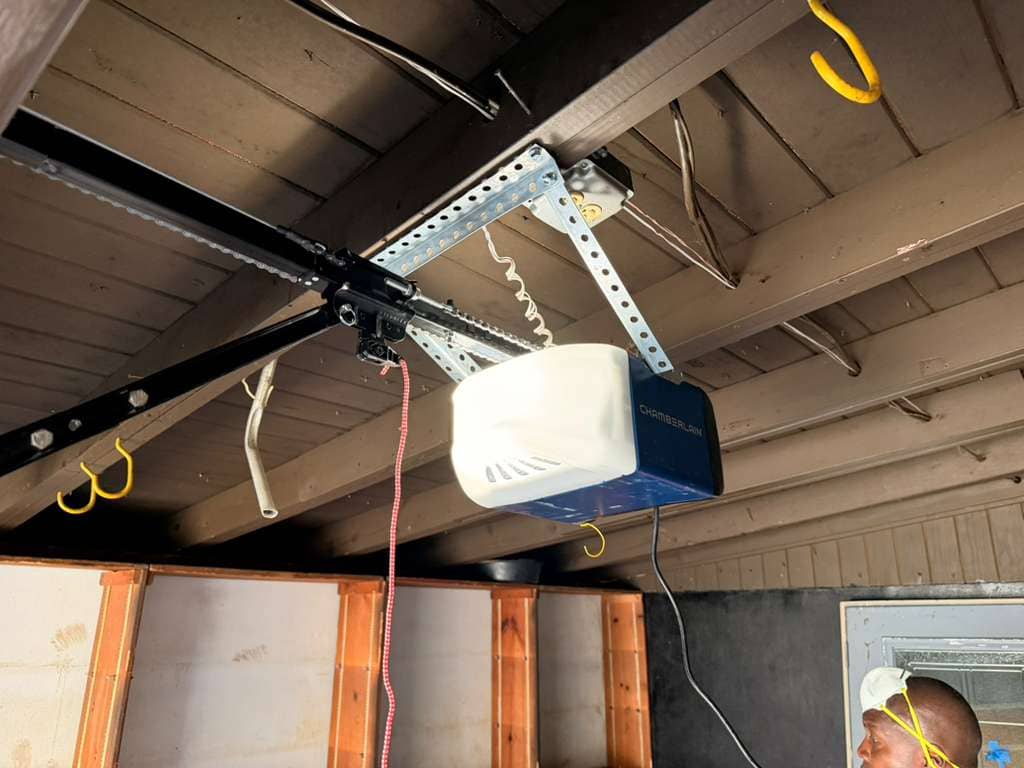
Whether you’re looking for Garage Door Opener Installation OKC, comparing steel vs. wood garage doors, or learning basic maintenance, this guide gives clear, practical advice you can use today. Readable, local-focused, and written for homeowners — not technicians.
How Garage Door Openers Work
Garage door openers in OKC are simple at their core: a motor drives a mechanism that moves the door along tracks. Most homes use one of three common drive types — chain, belt, or screw — and a safety system that includes sensors and automatic reversal. Knowing the parts helps you spot issues early.
Key parts
- Motor: Provides the power to lift and lower the door.
- Drive system: Chain, belt, or screw moves the trolley.
- Trolley and rail: Connect opener to the door arm to slide the door.
- Safety sensors: Infrared sensors stop the door if something blocks the path.
- Limit switches: Tell the opener when the door is fully closed or open.
How it opens and closes
When you press the remote or wall button the motor turns the drive, moving the trolley which pushes or pulls the door arm. Springs (torsion or extension) counterbalance the door weight so the motor only needs to overcome friction and inertia rather than full door weight.
Common problems and quick checks
- Door won’t move: Check power, remote batteries, and wall switch first.
- Opener runs but door doesn’t move: Likely a disconnected trolley or broken spring.
- Door reverses or stops: Clean and align safety sensors; check for obstructions on the track.
Garage Door Opener Installation OKC — What to Expect
Installing a garage door opener in OKC is usually a half-day job for a professional. A pro will ensure correct opener capacity (horsepower), proper spring balance, correct travel limits, and safety features are in place.
Selecting the right opener
- 1/2 HP: Good for single-car doors and lighter doors.
- 3/4 HP to 1 HP: Better for heavier or insulated doors and frequent use.
- Drive choice: Belt drives are quieter (good for attached garages); chain drives are more affordable; screw drives require less maintenance in dry climates.
Installation checklist
- Verify door balance before connecting the opener.
- Choose an opener sized for the door’s weight and use frequency.
- Ensure sensors are level and unobstructed.
- Set travel limits and test auto-reverse.
- Show homeowner manual release and controls.
10 Essential Garage Door Maintenance Tips to Prevent Costly Repairs
Simple maintenance keeps your door working smoothly and extends the life of parts. Aim for a quick check every 3–6 months.
- Inspect and tighten hardware — bolts and brackets can loosen with motion.
- Lubricate rollers, hinges, springs, and the opener’s chain or screw (use recommended lubricants).
- Test auto-reverse by placing an object in the door path to ensure it reverses.
- Check and clean safety sensors; wipe lenses and realign if needed.
- Balance the door: disconnect opener and raise halfway — the door should stay put.
- Inspect cables for frays and wear; never attempt cable replacement yourself.
- Replace weatherstripping if cracked to keep out drafts and pests.
- Test remote controls and replace batteries annually.
- Keep tracks clean and free of debris; don’t use excessive force to remove dents — call a pro.
- Schedule professional inspection yearly, or sooner with unusual noises or performance changes.
Steel vs. Wood Garage Doors: Comparing Durability, Cost & Style
Steel vs. Wood Garage Doors depends on budget, aesthetics, maintenance tolerance, and Oklahoma City climate considerations.
Steel doors
- Durability: Highly durable and resistant to warping.
- Cost: Generally more affordable upfront and lower maintenance costs.
- Maintenance: Low — periodic cleaning and touch-up paint for scratches.
- Insulation: Available with foam cores for energy efficiency.
Wood doors
- Style: Warm, customizable, and visually appealing.
- Cost: Higher initial cost and higher long-term maintenance (staining, sealing).
- Durability: Can warp or rot if not properly maintained—OKC’s weather means regular care is essential.
Recommendation: If you want low maintenance and value, choose steel. If curb appeal and custom style matter most and you’re willing to maintain it, choose wood.
How Garage Door Springs Work and Why Professional Repair Matters
Springs carry most of the door’s weight. When Garage Door Springs Work fail, the door can become dangerous and heavy. Spring repair is one of the most common and hazardous garage door tasks—always hire a trained technician.
Why springs matter
- Balance: Springs counterbalance the door so the opener only needs to move it.
- Safety: A broken spring can cause the door to slam shut uncontrolled or fall off tracks.
- Lifespan: Springs are rated by cycles (open/close). High-use homes will need replacement sooner.
Why call a pro
- Tension risks: Springs are under extreme tension and can cause serious injury if mishandled.
- Proper tools and parts: Pros use correct winding bars and replacement springs sized for your door.
- Warranty and safety: Licensed technicians provide warranties and ensure safe installation.
What’s the Difference Between Torsion and Extension Springs in OKC?
Two main spring types are used on residential garage doors Torsion and Extension Springs in OKC. Understanding the difference helps with maintenance decisions and conversations with your service tech.
Torsion springs
- Location: Mounted above the door on a metal shaft.
- Operation: Twist to store energy and balance the door; multiple springs can share the load.
- Pros: More durable, smoother operation, safer if paired with proper safety cables and containment systems.
- Cons: More expensive to install or replace.
Extension springs
- Location: Run along the horizontal tracks, stretching when the door closes.
- Operation: Extend to counterbalance the door weight.
- Pros: Lower initial cost.
- Cons: Higher failure rate, can be more dangerous without safety cables, less smooth operation.
In OKC, where temperature changes and frequent storms can stress components, torsion springs are often recommended for their reliability and safety.
Quick FAQ
How much does garage door opener installation OKC usually cost?
Costs vary by opener type and door complexity. Expect a range from affordable chain-drive installs to higher-priced quiet belt-drive models—get local quotes that include spring inspection and setup.
How often should I schedule professional maintenance?
Once a year is a good baseline; high-use doors may need checkups every six months.
Can I replace springs myself?
No. Spring replacement is dangerous and should be done by a trained technician.
Next Steps — Keep Your Garage Door Safe and Smart
For homeowners in OKC: choose the right opener for your door, keep up with the 10 essential maintenance tips, and let professionals handle spring work. If you’re comparing steel vs. wood, balance style with maintenance needs. For installation, repairs, or a professional inspection, contact a licensed local garage door service to get an on-site estimate and personalized recommendations.
Need help now? Schedule a professional garage door inspection in OKC to ensure safe operation and avoid costly repairs.Garage Doors OKC | Practical tips for homeowners. For local installation or repair, consult licensed professionals in Oklahoma City.