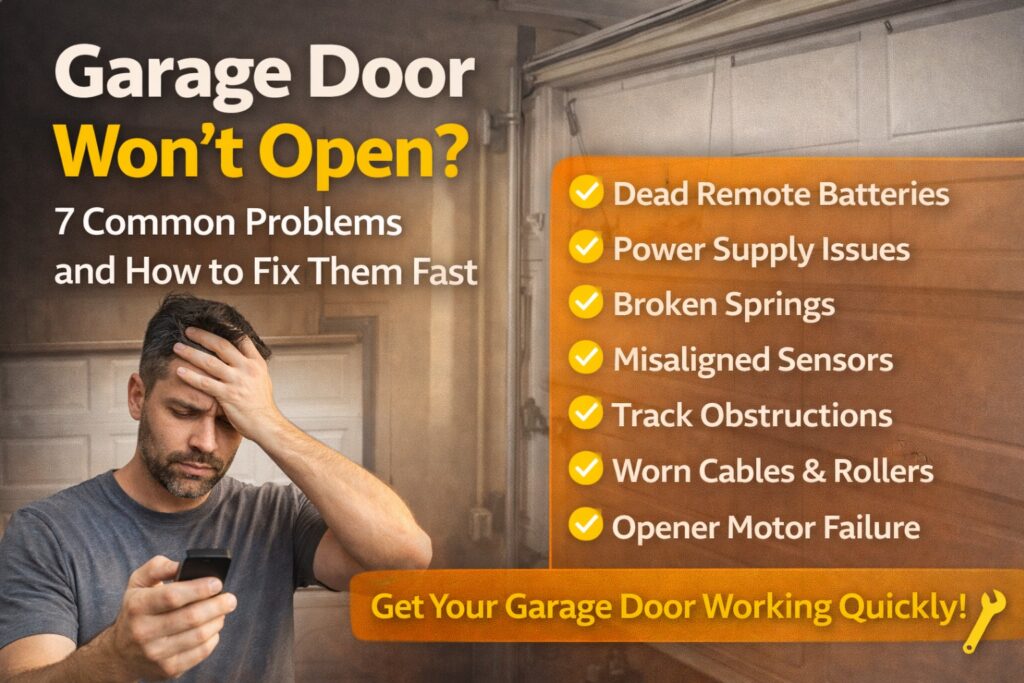
A garage door that refuses to open can quickly disrupt your day. Whether you’re heading to work or returning home, a malfunctioning garage door is both inconvenient and frustrating. Fortunately, most issues have identifiable causes and practical solutions. Understanding the most common problems helps you act quickly and prevent larger system damage.
In many cases, timely attention prevents the need for emergency Garage Door Repair and keeps your system running efficiently.
1. Dead Remote Batteries
One of the simplest reasons your garage door won’t open is a dead remote battery. If the wall switch works but the remote does not, replacing the battery may immediately solve the problem.
If new batteries don’t fix the issue, reprogramming the remote or checking for signal interference may be necessary.
2. Power Supply Problems
If neither the remote nor the wall button works, check the power source. The opener may be unplugged, or a tripped circuit breaker could be cutting power.
Inspect the outlet and breaker panel. Restoring power often resolves the issue instantly. However, if the opener still does not respond, internal wiring may require professional inspection.
3. Broken Torsion or Extension Springs
Garage Door Springs carry the majority of the door’s weight. When a spring breaks, the opener may struggle or fail completely. You might hear a loud snapping sound when the spring breaks.
Signs include a heavy door, uneven lifting, or visible gaps in the spring coil. Spring replacement is not a DIY project due to high tension. Professional Garage Door Service ensures safe and accurate replacement.
4. Misaligned Safety Sensors
Modern garage doors use photo-eye sensors to prevent accidents. If the sensors are misaligned or blocked, the system may refuse to open or close.
Check for dirt, debris, or loose wiring. Clean the lenses and ensure both sensors face each other properly. This small adjustment often restores normal function.
5. Track Obstructions or Damage
Garage door tracks guide the rollers smoothly during operation. If debris, dents, or bends obstruct the track, the door may jam or stop halfway.
Inspect tracks for visible damage and remove any blockages. Severe bends require professional repair to avoid further system strain.
Routine Garage Door Maintenance reduces the likelihood of track-related problems.
6. Worn-Out Cables or Rollers
Cables and rollers support smooth door movement. Frayed cables or worn rollers can cause the door to stick or move unevenly.
If you notice grinding noises or jerky motion, these components may need attention. Replacing damaged parts promptly prevents additional wear on the opener.
Regular inspections minimize unexpected breakdowns and costly repairs.
7. Opener Motor or Circuit Board Failure
If all mechanical components appear intact but the door still won’t open, the issue may lie within the opener itself. Motor burnout, gear wear, or circuit board malfunction can prevent proper operation.
Modern systems, including Smart Garage Door Openers in 2026, rely on electronic components that must function correctly for smooth performance. Electrical faults often require professional diagnosis.
Upgrading outdated equipment may improve reliability and efficiency long term.
When to Call a Professional
While minor issues like battery replacement or sensor cleaning can be handled easily, mechanical or electrical failures should be addressed by trained technicians. Attempting spring or cable repairs without proper tools can result in injury.
Professional Garage Door Repair services ensure accurate diagnosis and safe repair. Expert technicians check the entire system to identify hidden issues and restore full functionality.
Preventing Future Problems
Preventive care is the best way to avoid unexpected breakdowns. Lubricating moving parts, checking balance, and scheduling annual Garage Door Service extend the lifespan of your door system.
Environmental factors also play a role. As discussed in How Humidity Affects Your Garage, excess moisture can cause rust and component deterioration. Maintaining proper ventilation protects both mechanical and electronic parts.
When your garage door won’t open, the problem is usually caused by power issues, broken springs, misaligned sensors, or worn components. Identifying the source quickly helps prevent further damage and inconvenience.
Routine maintenance and timely repairs ensure long-term performance and reliability. If troubleshooting does not resolve the issue, professional support restores safe and efficient operation.
Addressing problems early keeps your garage secure, functional, and ready whenever you need it.