
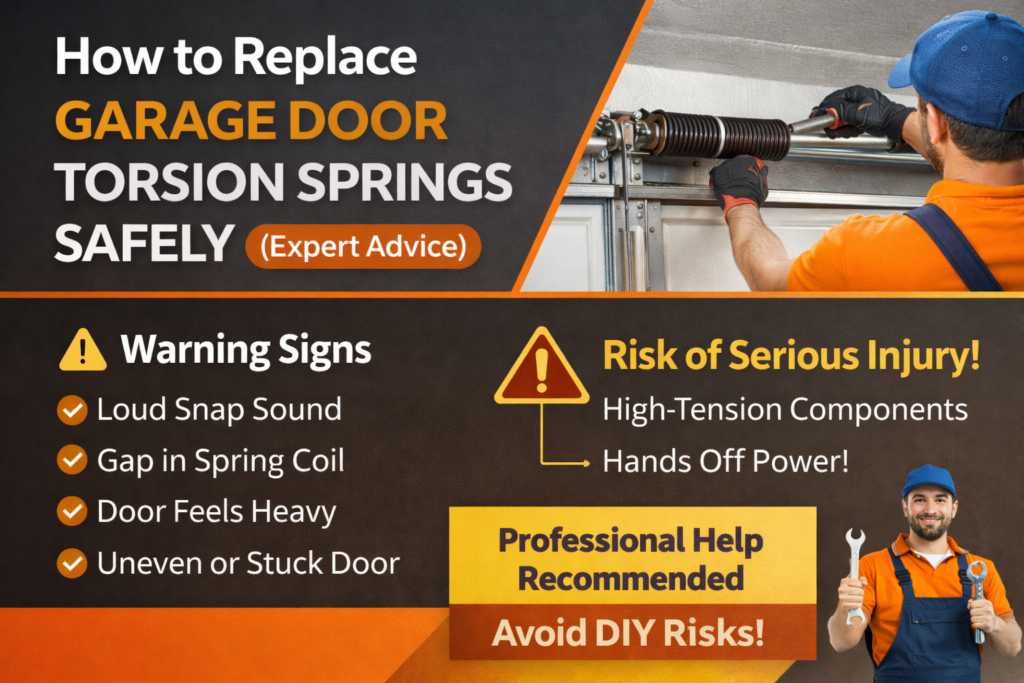
Garage Door Torsion Springs play a critical role in lifting and lowering your garage door smoothly. These tightly wound springs carry significant tension, making them one of the most dangerous components of the entire system. While some homeowners consider replacing torsion springs themselves, it is important to understand the risks, required tools, and safety precautions before attempting any repair.
If handled incorrectly, torsion spring replacement can lead to serious injury or costly damage. That’s why many homeowners rely on professional Garage Door Repair services for safe and accurate spring replacement.
Understanding Torsion Springs and Their Function
Torsion springs are mounted horizontally above the garage door opening. When the door closes, the springs wind up and store mechanical energy. When the door opens, the springs unwind in a controlled manner, lifting the door evenly.
Because these springs counterbalance the full weight of the garage door, they operate under extreme tension. A typical residential garage door can weigh hundreds of pounds, and the torsion spring system makes it manageable.
When springs break or lose tension, the door may feel unusually heavy, lift unevenly, or refuse to open entirely.
Signs Your Torsion Spring Needs Replacement
Recognizing early warning signs can prevent sudden failure. Common indicators include:
A loud snapping sound from the garage
Visible gap in the torsion spring coil
The door lifting unevenly
The opener struggling to raise the door
The door feeling extremely heavy when lifted manually
Ignoring these signs often leads to emergency Garage Door Service calls. Prompt attention reduces strain on the opener and prevents additional system damage.
Why Torsion Spring Replacement Is Dangerous
Torsion springs are tightly wound and secured with set screws on a metal shaft. Removing or loosening them without proper tools can cause the spring to release violently. This sudden release of tension can result in serious injury.
Improper installation can also leave the door unbalanced, placing excessive strain on cables, rollers, and Smart Garage Door Openers. Even small miscalculations in tension adjustment can affect performance and safety.
Because of these risks, professional expertise is strongly recommended.
Essential Safety Precautions
If evaluating whether to proceed with replacement, safety must be the top priority. Always disconnect power to the garage door opener before inspecting components. Secure the door in a closed position to prevent unexpected movement.
Proper winding bars specifically designed for torsion springs must be used. Substituting tools such as screwdrivers can lead to loss of control during tension adjustments.
Protective gloves and eye protection are necessary, as metal fragments or slipping tools can cause injury.
Even with precautions, torsion spring replacement remains a high-risk task.
The Basic Replacement Process (Overview Only)
The replacement process involves carefully unwinding the broken spring using winding bars, loosening the set screws, and removing the damaged spring from the torsion shaft. The new spring must match the door’s weight and size specifications.
Once installed, the spring is wound to the correct number of turns based on door height and weight. Proper balance testing follows to ensure the door remains stable when lifted halfway.
Incorrect tension settings can result in a door that either slams shut or rises too quickly. Precision is critical throughout the process.
The Importance of Proper Spring Selection
Not all torsion springs are the same. Garage Door Springs vary by wire size, length, inside diameter, and cycle rating. Installing the wrong spring may cause premature wear or unsafe operation.
High-cycle springs offer longer lifespan and better durability, especially for households with frequent daily use. Professional technicians measure and match springs accurately to ensure optimal performance.
Selecting the correct replacement spring protects your entire garage door system.
How Professional Service Ensures Safety
Working with experienced professionals significantly reduces risk. Technicians are trained to handle high-tension components safely and efficiently. They also inspect related parts such as cables, bearings, and center brackets during the service.
Professional Garage Door Repair services include system balancing, lubrication, and final safety checks. This comprehensive approach prevents recurring issues and ensures long-term reliability.
A properly installed torsion spring restores smooth operation and reduces strain on your opener.
Preventive Maintenance After Replacement
After spring replacement, routine Garage Door Maintenance helps extend lifespan. Regular lubrication reduces friction and prevents rust buildup. Annual inspections detect early signs of wear before failure occurs.
Environmental factors like How Humidity Affects Your Garage can also impact spring longevity. Keeping your garage properly ventilated and dry reduces corrosion and protects metal components.
Ongoing maintenance is far more affordable than emergency repairs.
Replacing torsion springs is not a typical DIY project. The high tension involved makes it one of the most hazardous garage door repairs. While understanding the process is helpful, professional installation remains the safest and most reliable option.
If you notice signs of spring failure, scheduling expert Garage Door Service ensures safe replacement and accurate system calibration. Proper installation protects your door, your opener, and most importantly, your safety.
Taking action quickly prevents further damage and keeps your garage door operating smoothly for years to come.