
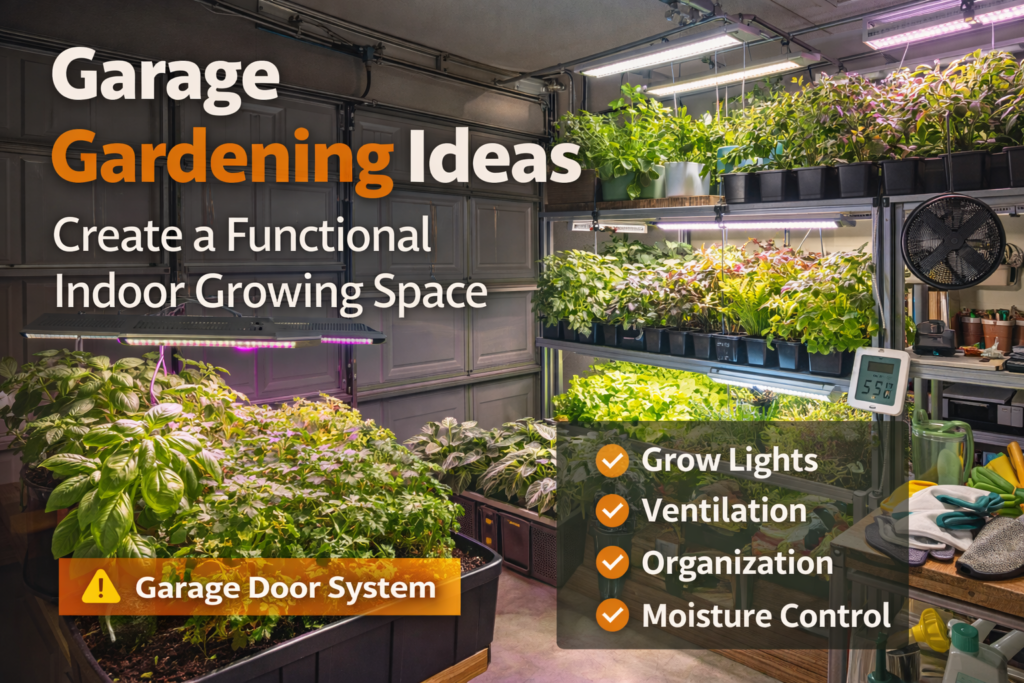
Your garage doesn’t have to be just a place for parking vehicles and storing tools. With the right setup, it can become a productive and functional indoor growing space. Garage gardening is gaining popularity among homeowners who want fresh herbs, vegetables, and plants year-round without relying solely on outdoor conditions.
Creating a successful indoor garden inside your garage requires planning, proper lighting, ventilation, and moisture control. When done correctly, you can transform unused space into a thriving growing environment.
Why Use Your Garage for Indoor Gardening?
Garages provide controlled environments that can be modified for plant growth. Unlike outdoor gardens, indoor setups protect plants from harsh weather, pests, and seasonal limitations. This allows for consistent growing conditions throughout the year.
A well-organized garage can support shelves, grow lights, irrigation systems, and storage areas without interfering with daily use. The key is balancing functionality with proper environmental management.
Managing Light for Healthy Growth
Natural light inside garages is often limited. To compensate, installing high-quality grow lights is essential. LED grow lights are energy-efficient and provide the full spectrum needed for plant development.
Position lighting close enough to support growth but far enough to prevent overheating. Adjustable light systems allow flexibility as plants grow taller. Timers help maintain consistent light cycles, mimicking natural daylight patterns.
Proper lighting ensures plants receive the energy required for healthy development.
Controlling Temperature and Ventilation
Temperature control plays a major role in indoor gardening success. Garages can experience extreme temperature swings, which may stress plants. Adding insulation or sealing gaps improves stability.
Ventilation is equally important. Fresh air circulation prevents mold, mildew, and stagnant conditions. Small exhaust fans or portable ventilation systems help maintain airflow while regulating humidity levels.
As discussed in How Humidity Affects Your Garage, excess moisture can damage both stored items and structural components. Monitoring humidity protects both your plants and your Garage Door Torsion Springs system.
Organizing Your Growing Space
Vertical shelving maximizes space efficiency in smaller garages. Sturdy racks allow you to grow multiple plant varieties without cluttering the floor area. Hydroponic systems are another option for compact and efficient gardening.
Keep walkways clear and maintain safe access to your garage door. A balanced layout ensures your gardening setup does not interfere with daily operation or routine Garage Door Maintenance.
Organization improves productivity and keeps the space functional.
Managing Moisture and Protecting Your Garage
Indoor gardening increases humidity levels due to watering and plant transpiration. Without proper moisture control, metal components inside the garage may develop rust over time.
Maintaining proper ventilation and using dehumidifiers reduces the risk of corrosion. This is especially important for Garage Door Springs, tracks, and hardware that require protection from moisture.
If excessive humidity begins affecting door performance, scheduling Garage Door Service helps prevent mechanical issues linked to environmental conditions.
Electrical Safety and Smart Systems
Indoor gardening often involves lighting systems, timers, and irrigation equipment. Ensuring proper electrical installation reduces fire hazards and protects both plants and property.
Modern technology can enhance your setup. For example, smart monitoring systems allow you to track temperature and humidity remotely. Some homeowners even integrate their setup with Smart Garage Door Openers in 2026 for better access control and monitoring.
Technology improves efficiency while maintaining safety.
Choosing the Right Plants
Not all plants thrive equally in indoor environments. Herbs like basil, mint, and parsley adapt well to controlled settings. Leafy greens such as lettuce and spinach also perform well under LED lighting.
For beginners, starting with low-maintenance plants simplifies the process. As you gain experience, you can expand to fruiting vegetables or flowering plants.
Selecting appropriate plants ensures consistent success.
Keeping Your Garage Door System in Good Condition
While transforming your garage into a growing space, don’t overlook the condition of your garage door system. Increased humidity and frequent door usage can affect springs, rollers, and tracks.
Routine inspections and timely Garage Door Repair prevent small mechanical issues from escalating. A properly functioning garage door maintains insulation and helps regulate indoor conditions for your garden.
Balancing gardening activities with regular maintenance keeps the entire space operating efficiently.
Garage gardening is a practical way to grow fresh produce year-round while maximizing unused space. With proper lighting, ventilation, moisture control, and organization, your garage can become a productive indoor garden.
Maintaining environmental balance protects both your plants and your garage infrastructure. Monitoring humidity, ensuring safe electrical setups, and scheduling periodic maintenance support long-term success.
By combining thoughtful planning with regular care, you can create a functional indoor growing space that enhances your home’s value and usability.