
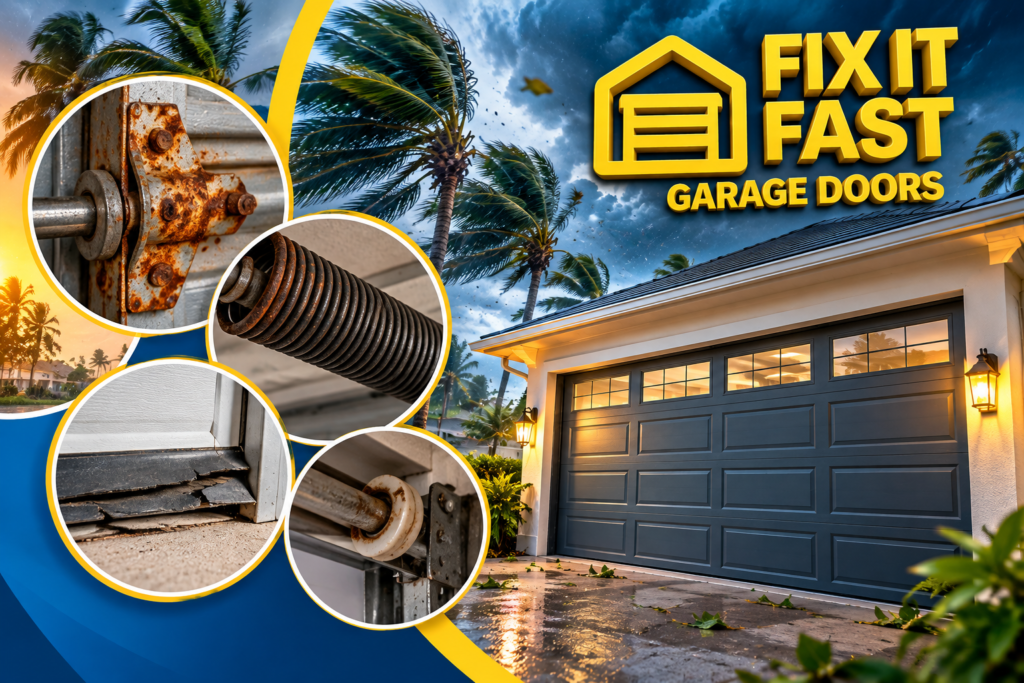
Florida weather can be hard on a garage door. Heat, high humidity, heavy rain, strong storms, and salty coastal air can slowly affect the door and many of its moving parts. Springs, rollers, tracks, cables, weather seals, and openers may all show signs of wear over time.
Some problems start small, such as a little rust or a new squeaking sound. If they are ignored, the garage door may become noisy, slow, uneven, or difficult to operate. Knowing what to look for can help Florida homeowners deal with problems before they become more serious.
How Does Florida Weather Affect Your Garage Door?
Florida’s combination of moisture and heat can put extra stress on garage door parts. Humidity may contribute to corrosion on metal components, while rain can enter through damaged seals. Storm conditions can also place additional pressure on the door and its hardware.
Regular inspection and maintenance can help you spot these problems early. If your door is already stuck, damaged, noisy, or moving unevenly, professional Garage Door Repair may be needed.
Why Does Your Garage Door Start Rusting?
Rust is one of the most common weather-related concerns for Florida garage doors. Moisture can settle on springs, tracks, hinges, rollers, cables, and other metal hardware. Homes near the coast may also deal with salty air, which can make corrosion develop faster.
Check visible metal parts regularly. Small signs of rust are easier to deal with than heavily corroded parts.
Homeowners in the area can also learn more about local service through Garage Doors in Port St. Lucie, FL.
Why Does a Garage Door Become Noisy in Humid Weather?
Humidity can affect rollers, hinges, tracks, bearings, and other moving parts. Moisture can also mix with dirt and buildup, creating more friction as the door moves. This may result in squeaking, grinding, scraping, rattling, or popping sounds.
A sudden change in sound should not be ignored. Read Why Is My Garage Door Making a Loud Noise When Opening? to learn more about common causes.
Can Florida Weather Damage Garage Door Springs?
Yes. Garage door springs are metal and operate under high tension. Florida’s moisture and humidity can contribute to surface rust and corrosion. Normal daily use also puts stress on the springs every time the door opens and closes.
Look at the springs from a safe distance. If you notice a gap, heavy rust, or visible damage, do not attempt to adjust or replace the spring yourself.
You can learn more in What Causes Garage Door Springs to Break?.
Can Heavy Rain Damage Garage Door Weather Seals?
The seals around a garage door help keep water, dirt, insects, and outside air from entering the garage. Florida heat and humidity can cause rubber seals to become worn, loose, or brittle over time.
Check the bottom and side seals for cracks, gaps, or damaged areas. A worn seal may allow rainwater and moisture inside, which can contribute to additional rust and moisture problems.
For local garage door services, homeowners can visit Garage Doors in Boynton Beach, FL.
Why Does a Garage Door Move Slowly or Unevenly?
A garage door that shakes, moves slowly, or looks uneven may have a problem with rollers, tracks, cables, springs, or other hardware. Humidity can cause corrosion, while dirt and moisture can collect around moving parts and make operation rougher.
Do not continue using the door if it looks unsafe or appears to be coming off its tracks. Garage door cables and springs are under high tension and should be handled by a trained technician.
Can Florida Weather Affect the Garage Door Opener?
Weather may affect the opener indirectly when other garage door parts become harder to move. Rusty tracks, stiff hinges, worn rollers, or spring problems can make the system work harder. Moisture may also affect sensors or electrical connections in some situations.
If you hear the opener running but the garage door does not move, there may be another mechanical problem.
Read Why Won’t My Garage Door Open Even Though the Opener Works? for common reasons this happens.
How Can Regular Maintenance Reduce Weather-Related Problems?
Regular maintenance is one of the simplest ways to protect a garage door from Florida weather. Check the springs, cables, rollers, tracks, hinges, weather seals, opener, and safety sensors. Cleaning and proper lubrication of suitable moving parts can also help reduce unnecessary friction.
You can read How Often Should You Service Your Garage Door? for more maintenance guidance.
Homeowners looking for local service can also visit Garage Doors Jensen Beach, FL.
When Should You Call Fix It Fast Garage Doors?
Some basic cleaning and visual checks can be done by homeowners, but damaged springs, cables, tracks, and other high-tension parts need professional attention.
If your garage door is stuck, shaking, unusually noisy, moving unevenly, showing heavy rust, or having trouble opening and closing, it is better to have the problem checked.
Fix It Fast Garage Doors provides garage door repair, spring and cable repair, roller and track service, opener service, installation, replacement, and maintenance.
Frequently Asked Questions
Can Florida humidity damage a garage door?
Yes. High humidity can contribute to rust and corrosion on springs, tracks, cables, rollers, hinges, and other metal parts.
Why does my garage door make more noise in humid weather?
Moisture, dirt buildup, rust, or extra friction around moving parts can make a garage door squeak, grind, scrape, or rattle.
Can Florida rain damage a garage door?
Rain and moisture can contribute to rust, especially when weather seals are worn or water regularly reaches exposed metal parts.
How often should I check my garage door in Florida?
Regular visual checks are a good idea, especially after severe weather or when you notice rust, unusual noises, rough movement, or damaged seals.
Should I repair a rusty garage door spring myself?
No. Garage door springs are under high tension. A rusty, damaged, or broken spring should be inspected and repaired by a trained professional.
Can Florida storms affect garage door tracks and rollers?
Storms, moisture, debris, and corrosion can contribute to problems around tracks and rollers. If the door starts shaking or moving unevenly, have the system checked before continuing to use it.