Choosing the right opener for a heavy or insulated garage door is essential for performance, durability, and long-term efficiency. Heavier doors—especially insulated or solid wood models—require more lifting power and a reliable system to avoid strain or breakdowns. At Fix It Fast Garage Doors, selecting the correct opener is considered just as important as the door itself for smooth and safe operation.
Why Heavy Doors Need the Right Opener
Not all openers are designed to handle extra weight. Insulated or oversized doors can weigh significantly more than standard ones, which means a basic system may struggle or fail over time. Choosing the wrong type can lead to noise, wear, and higher energy usage.
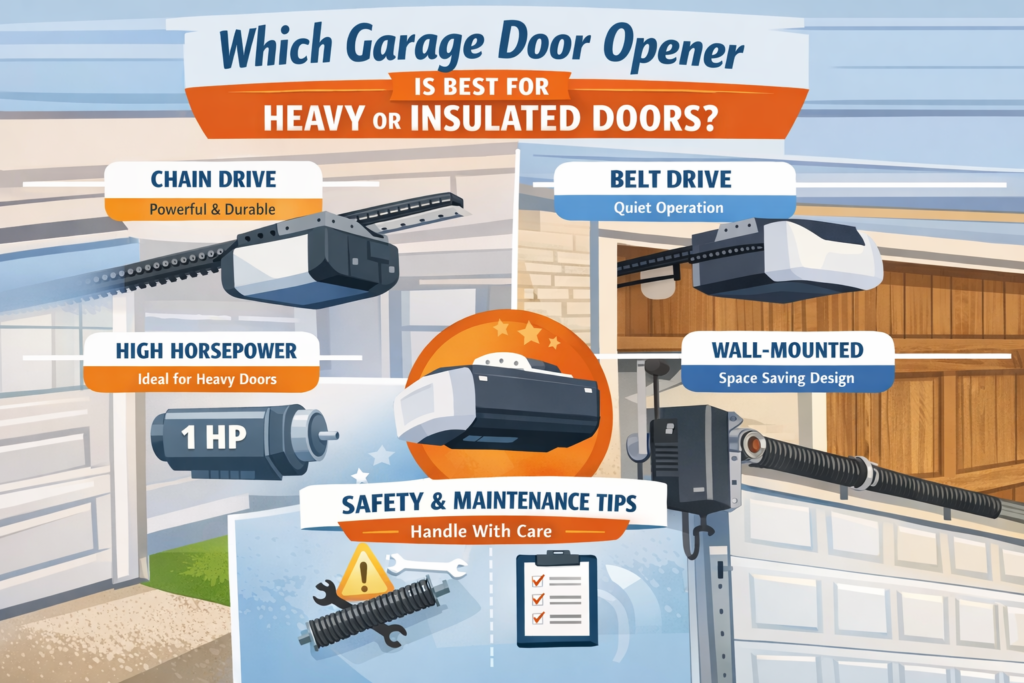
Chain-driven systems are widely recommended for heavy-duty applications because they provide stronger lifting power and durability. These systems use a metal chain, making them more capable of handling large or insulated doors without slipping or losing efficiency.
Chain Drive Openers – Best for Strength and Durability
If your priority is power, chain drive openers are often the best choice. These systems are known for their strength and ability to lift heavier doors consistently.
Chain drive models are ideal for:
- Insulated Garage Doors
- Large double doors
- Solid wood or custom designs
They are considered more durable and reliable for heavy lifting because the metal chain can handle higher loads compared to other systems.
However, they do come with some downsides. Chain drives tend to be noisier and require occasional maintenance, such as lubrication. Despite this, their performance makes them the top choice for heavy-duty use.
Belt Drive Openers – Smooth but Limited for Heavy Doors
Belt drive openers are known for their quiet and smooth operation. They use a reinforced rubber belt instead of a metal chain, which reduces vibration and noise.
These systems are best suited for:
- Standard residential doors
- Homes with attached garages
- Quiet operation needs
While they offer convenience and comfort, they are generally not recommended for very heavy or insulated doors because they have lower lifting capacity compared to chain systems.
Horsepower Matters for Heavy Garage Doors
Beyond the drive type, motor power is another key factor. For heavy or insulated doors, a higher horsepower motor is essential.
General recommendations include:
- ½ HP: Standard lightweight doors
- ¾ HP: Insulated or double doors
- 1 HP or more: Oversized or solid wood doors
Choosing the correct motor ensures smooth operation and prevents unnecessary strain, which can extend the lifespan of your opener.
Wall-Mounted (Jackshaft) Openers – A Modern Alternative
For homeowners looking for advanced solutions, wall-mounted openers are another option. These systems operate from the side of the door and connect directly to the torsion bar.
They are ideal for:
- Heavy insulated doors
- High ceilings or limited overhead space
- Modern smart garage setups
These openers provide strong lifting capability and a cleaner installation, making them a great alternative to traditional systems.
Maintenance and Performance Considerations
Even the best opener requires proper maintenance to perform efficiently. Many homeowners ask, Why Is My Garage Door Not Opening Even Though the Motor Is Running? This often relates to worn components or improper setup, especially when dealing with heavy doors.
Spring balance also plays a major role. If you’re unsure about your system, you might wonder, How Do I Know If My Garage Door Spring Is Broken or Just Loose? Faulty springs can make even a powerful opener struggle.
Regular servicing is essential, and many people ask, How Often Should I Service My Garage Door for Best Performance? Routine maintenance ensures all components work together efficiently, reducing strain on the opener.
Addressing Common Performance Issues
Heavy doors can sometimes behave unpredictably if the system is not properly configured. For example, How Can I Fix a Garage Door That Opens and Closes Randomly? may indicate sensor or wiring issues that affect efficiency.
It’s also important to recognize early warning signs. Knowing What Are the Warning Signs My Garage Door Is About to Fail? can help prevent major breakdowns and costly repairs.
Safety and Spring Systems
Handling heavy garage doors requires proper safety measures. Many homeowners consider DIY repairs and ask, Is It Safe to Replace Garage Door Springs by Myself? Due to high tension, professional assistance is always recommended.
Understanding spring types is equally important. If you’re unsure, you might explore What’s the Difference Between Torsion and Extension Springs? Choosing the right system helps maintain balance and reduces stress on the opener.
Cost and Upgrade Considerations
If your current opener cannot handle the weight, upgrading may be necessary. Many homeowners research, What Is the Average Cost to Replace a Garage Door in 2026? Investing in a high-quality opener designed for heavy doors can save money in the long run by reducing repairs and improving efficiency.
For heavy or insulated Garage Doors, the best opener is one that combines strength, reliability, and proper motor power. Chain drive systems remain the top choice for durability, while wall-mounted options offer modern performance. Belt drives, although quiet, are better suited for lighter doors.
By selecting the right opener and maintaining it regularly, you can ensure smooth operation, improved efficiency, and long-lasting performance for your garage system.