Garage door springs are one of the hardest-working components of your garage door system. Every time you open or close your garage door, the springs help lift and lower hundreds of pounds safely and efficiently. Because they operate under constant tension, they naturally wear out over time.
One of the most common questions homeowners ask is, “How long do garage door springs usually last?” Understanding their lifespan, the warning signs of wear, and the importance of professional maintenance can help you avoid unexpected breakdowns and costly emergency repairs.
If you’re searching for reliable Garage Doors OKC services, learning about garage door spring lifespan is an important step toward protecting your investment.
What Is the Average Lifespan of Garage Door Springs?
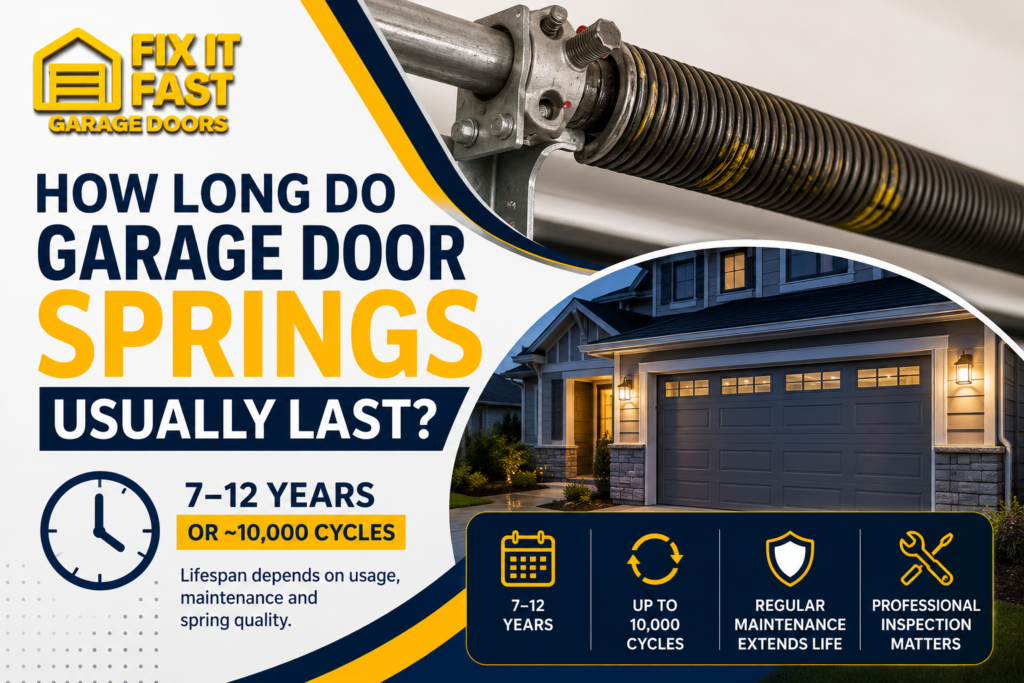
Most standard garage door springs last between 7 and 12 years, or approximately 10,000 opening and closing cycles.
A cycle consists of one complete opening and one complete closing of the garage door.
For example:
- Opening your garage door in the morning and closing it counts as one cycle.
- Opening it again when you return home and closing it counts as another cycle.
Homes with multiple drivers or frequent garage door use will naturally reach the spring’s cycle limit much sooner.
What Factors Affect How Long Garage Door Springs Last?
Several factors determine how long garage door springs remain in good working condition.
Daily usage is the biggest factor. Garage doors that open several times every day place significantly more stress on the springs than doors used occasionally.
Weather also plays an important role. Oklahoma City’s hot summers, cold winters, humidity, and temperature changes can accelerate metal fatigue.
Poor maintenance, improper spring sizing, corrosion, and lack of lubrication may also shorten spring lifespan.
Routine inspections help maximize the life of your garage door springs.
What Are the Different Types of Garage Door Springs?
There are two primary types of garage door springs:
- Torsion Springs
- Extension Springs
Each operates differently and offers unique advantages depending on your garage door system.
If you’re unsure which spring system your garage door uses, read Torsion vs. Extension Garage Door Springs: Which Option Is Right for Your Home? to understand the differences.
Choosing the correct spring system helps improve safety, reliability, and long-term performance.
How Do Garage Door Springs Actually Work?
Garage door springs do much more than simply lift the door.
They store mechanical energy when the door closes and release that energy to assist with lifting the heavy weight of the garage door during opening.
Without properly functioning springs, the garage door opener would struggle to lift the door safely.
For a detailed explanation, read How Garage Door Springs Work and Why Professional Repair Matters.
Understanding how springs function helps homeowners recognize early warning signs before complete failure occurs.
What Are the Signs That Garage Door Springs Are Wearing Out?
Garage door springs rarely fail without warning.
Common symptoms include:
- The garage door feels unusually heavy.
- The opener struggles to lift the door.
- The door opens unevenly.
- Loud popping or snapping sounds.
- Visible gaps in the spring.
- Jerky movement while opening.
- Slow garage door operation.
If you notice any of these warning signs, professional inspection should be scheduled promptly.
You can also learn more in How Long Do Garage Door Springs Last? Signs It’s Time for Replacement.
Can Garage Door Springs Last Longer Than 10,000 Cycles?
Yes.
Many homeowners choose high-cycle garage door springs that are designed to last 20,000, 30,000, or even 50,000 cycles.
These upgraded springs are especially beneficial for households with multiple vehicles or heavy daily garage door usage.
Although high-cycle springs have a higher initial cost, they often provide greater long-term value by reducing future replacements.
Does Regular Maintenance Increase Spring Lifespan?
Absolutely.
Routine maintenance is one of the easiest ways to extend the life of garage door springs.
Professional maintenance typically includes:
- Lubricating springs
- Inspecting for rust and corrosion
- Checking spring balance
- Tightening hardware
- Inspecting cables and rollers
- Testing overall door performance
Regular maintenance reduces unnecessary stress on the springs and improves the reliability of the entire garage door system.
Can Weather Affect Garage Door Springs?
Yes.
Oklahoma’s changing weather conditions can significantly affect spring performance.
Extreme heat causes metal expansion, while freezing temperatures increase brittleness and stress.
Humidity may also contribute to rust and corrosion over time.
Although weather cannot be controlled, regular maintenance helps minimize its impact and keeps springs operating more efficiently.
Should Homeowners Replace Garage Door Springs Themselves?
No.
Garage door springs are under extreme tension and can cause serious injuries if handled incorrectly.
Specialized tools, proper training, and safety procedures are required for safe spring replacement.
Homeowners considering DIY spring repairs should first read How to Replace Garage Door Torsion Springs Safely (Expert Advice).
Professional technicians have the knowledge and equipment needed to safely replace damaged springs.
Why Is Professional Spring Inspection Important?
Even if your garage door appears to be operating normally, springs may already be approaching the end of their lifespan.
Routine inspections allow technicians to identify worn springs before they suddenly fail.
Early replacement helps prevent damage to openers, cables, rollers, and tracks while reducing the likelihood of emergency service calls.
Learning more about spring systems is also helpful. The guide A Complete Guide to Garage Door Springs: Types, Functions & Safety Tips explains how different spring systems operate and why proper maintenance is essential.
How Can Homeowners Maximize Garage Door Spring Life?
The best way to maximize spring lifespan is through preventive care.
Avoid forcing the garage door when problems develop.
Schedule annual professional inspections.
Keep springs properly lubricated.
Replace worn rollers and damaged cables promptly.
Most importantly, never ignore unusual noises or changes in garage door performance.
Small issues are often much less expensive to repair than complete spring failures.
Frequently Asked Questions
How long do garage door springs usually last?
Most standard garage door springs last between 7 and 12 years or approximately 10,000 cycles.
What causes garage door springs to wear out?
Normal use, weather conditions, rust, poor maintenance, and repeated opening and closing gradually weaken the springs.
Can garage door springs be repaired?
No. Broken springs are typically replaced rather than repaired because they lose their structural integrity.
How do I know if my garage door spring is broken?
Common signs include a heavy garage door, loud snapping sounds, uneven movement, visible gaps in the spring, or a garage door that won’t open.
Should both garage door springs be replaced together?
Yes. Since both springs experience similar wear, replacing them together helps maintain proper balance and extends the life of the garage door system.
Are high-cycle garage door springs worth the investment?
Yes. Homes with frequent garage door use often benefit from the longer lifespan of high-cycle springs.
Keep Your Garage Door Springs Working Safely
Garage door springs play a critical role in the safety and performance of your garage door. While they won’t last forever, regular maintenance, professional inspections, and timely replacement can significantly extend their lifespan and prevent unexpected failures.
If you’re looking for trusted Garage Doors OKC experts, visit Garage Doors to schedule professional spring inspection, repair, or replacement. Our experienced team is committed to keeping your garage door operating safely and reliably throughout the year.