
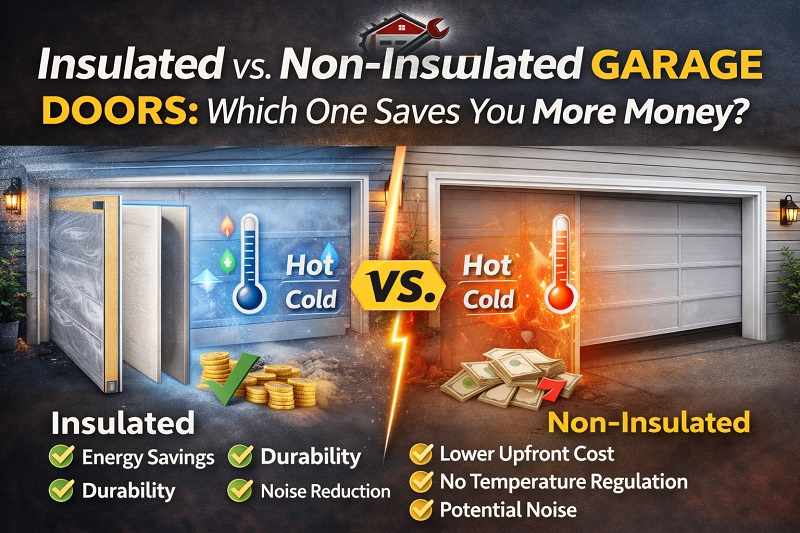
Choosing between insulated and non-insulated garage doors is more than a design decision — it directly impacts energy efficiency, comfort, durability, and long-term costs. Homeowners often focus on upfront pricing, but understanding how each option performs over time helps determine which truly saves more money.
Your Garage Door plays a major role in regulating temperature, especially if your garage is attached to your home. Making the right choice can reduce utility bills and minimize future Garage Door Repair OKC needs.
What Is an Insulated Garage Door?
An insulated garage door includes layers of steel or aluminum with insulation material — typically polyurethane or polystyrene — sandwiched between panels. This design improves thermal resistance, often measured by an R-value.
Higher R-values indicate better insulation performance. Insulated doors help maintain stable temperatures inside the garage, reducing heat loss in winter and heat gain in summer.
They also provide added strength and durability due to their multi-layer construction.
What Is a Non-Insulated Garage Door?
Non-insulated garage doors are typically single-layer steel or aluminum. They are lighter and more affordable upfront. These doors provide basic protection but do not offer temperature regulation.
For detached garages used primarily for vehicle storage, a non-insulated door may be sufficient. However, temperature fluctuations can be extreme without insulation, potentially affecting stored items and mechanical components.
Energy Efficiency and Utility Savings
One of the biggest cost differences appears in energy usage. If your garage is attached to your home, temperature transfer can influence indoor heating and cooling demands.
An insulated garage door helps prevent conditioned air from escaping and outdoor air from entering. Over time, this reduces strain on HVAC systems and lowers energy bills.
While non-insulated doors cost less initially, they may contribute to higher long-term energy expenses. Homeowners focused on overall savings often find insulated options more economical in the long run.
Durability and Maintenance Costs
Insulated garage doors are generally stronger due to their layered construction. The added thickness resists dents and structural damage better than single-layer doors.
Non-insulated doors are more vulnerable to impact damage, which can lead to panel repairs or replacements. Routine Garage Door Maintenance helps extend the lifespan of either option, but insulated doors often require fewer repairs over time.
Reduced repair frequency means fewer unexpected Garage Door Service visits, which contributes to long-term savings.
Noise Reduction Benefits
Insulated garage doors also provide better noise control. The insulation material dampens vibration and reduces operational noise from Garage Door Openers in 2026 and moving parts.
This is especially beneficial if your garage is attached to living spaces or used as a workshop. Non-insulated doors tend to be louder due to thinner panels and increased vibration.
Quieter operation improves overall comfort and enhances daily convenience.
Climate and Environmental Considerations
Environmental factors play a significant role in determining which option saves more money. In regions with extreme heat or cold, insulated doors provide noticeable performance advantages.
Temperature stability also protects garage door components. Excessive heat or moisture, as discussed in How Humidity Affects Your Garage, can accelerate wear on Garage Door Springs, cables, and electronic parts. Insulation helps regulate internal conditions, reducing long-term mechanical stress.
Choosing insulation in harsh climates typically results in greater financial benefits over time.
Upfront Cost vs. Long-Term Value
Non-insulated doors are more budget-friendly at installation. For homeowners prioritizing immediate affordability, they may seem appealing.
However, insulated garage doors often deliver better value through energy savings, enhanced durability, and reduced repair frequency. When factoring in potential Garage Door Repair costs, insulated doors may prove to be the more cost-effective investment.
Evaluating both short-term and long-term expenses helps determine the true financial impact.
Which Option Is Right for You?
If your garage is detached and rarely used beyond vehicle storage, a non-insulated door may be adequate. But if your garage connects to your home, doubles as a workspace, or stores temperature-sensitive items, insulation offers significant benefits.
Consulting professionals ensures proper installation and correct insulation rating for your needs. Expert Garage Door Service helps maximize efficiency and system performance regardless of your choice.
When comparing insulated vs. non-insulated Garage Doors, the real question isn’t just about upfront price — it’s about total cost over time. Insulated doors generally provide better energy efficiency, durability, and noise reduction, which often leads to long-term savings.
Non-insulated doors remain a practical option for specific situations but may result in higher operating costs in certain environments.
Careful consideration of climate, usage, and budget ensures you choose the door that truly saves you more money while maintaining reliable performance.