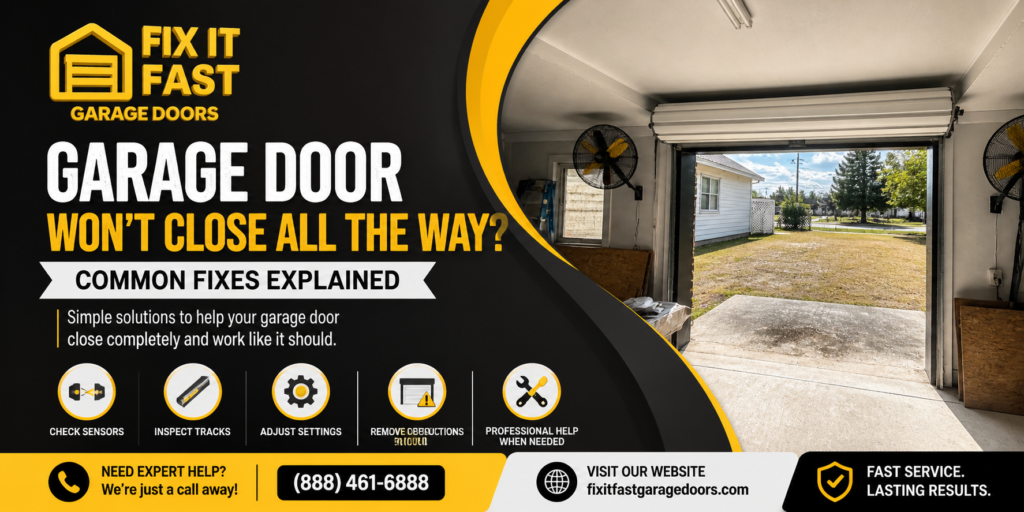
A Garage Door that refuses to close completely can be more than just a daily inconvenience—it can compromise your home’s security, energy efficiency, and safety. Many homeowners face this issue at some point, and while it may seem frustrating, the cause is often easier to identify than you might expect. Understanding how Garage Doors function and what can go wrong is the first step toward restoring smooth operation and avoiding unnecessary expenses.
Why Your Garage Door Stops Before Closing
Modern garage doors are designed with safety features that prevent them from closing if something is in the way. While this is essential for preventing accidents, it can also lead to situations where the door won’t close all the way, even when nothing is blocking it. Dust, debris, or slight misalignment can trick the system into thinking there’s an obstruction. Over time, wear and tear can also affect the performance of key components, making regular Garage Door Service important for long-term reliability.
Another common cause is related to sensor issues. These small devices, located near the bottom of the door tracks, communicate with each other to ensure a clear path. If they are dirty, misaligned, or damaged, the door may stop midway or reverse immediately after touching the ground. This is often one of the first things checked during a professional Garage Door Repair visit.
The Role of Tracks, Rollers, and Alignment
Your garage door relies on a system of tracks and rollers to move up and down smoothly. If the tracks become bent or obstructed, the door may not close properly. Even small debris like leaves or dust buildup can interfere with movement. Misalignment of tracks can also cause uneven closing, leaving gaps at the bottom.
Rollers that have worn out or lost lubrication may struggle to glide along the tracks. This creates resistance, which can trigger the door’s safety mechanism and prevent it from fully closing. Keeping these components clean and well-maintained is a simple but effective way to avoid frequent problems.
Limit Settings and Opener Issues
Garage door openers are programmed with limit settings that control how far the door travels when opening and closing. If these settings are off, the door may stop too early or reverse before it fully shuts. Adjusting these limits can often resolve the issue quickly.
In some cases, the problem may be linked to the opener itself. If you’ve ever faced a situation similar to “Garage Door Remote Not Working? Here’s What to Check First,” you already know how small electrical or signal issues can affect performance. Weak batteries, faulty wiring, or worn-out components can disrupt the closing cycle, requiring Affordable Garage Door Opener Repair to restore proper function.
Weather and Environmental Factors
Changes in temperature and weather conditions can also impact how your garage door operates. Metal components expand and contract with temperature shifts, which can affect alignment and movement. Cold weather can cause lubricants to thicken, making it harder for parts to move smoothly, while heat can lead to expansion that slightly alters the door’s fit within the frame.
Additionally, debris such as dirt, leaves, or even small stones can accumulate in the tracks, especially during windy or rainy seasons. These minor obstructions can prevent the door from closing completely, highlighting the importance of consistent maintenance.
The Importance of Regular Maintenance
Preventing issues like a garage door that won’t close all the way often comes down to routine care. Following guidelines like the “10 Essential Garage Door Maintenance Tips to Prevent Costly Repairs” can significantly extend the life of your system. Regular inspection of sensors, tracks, rollers, and springs ensures that small problems are addressed before they turn into major repairs.
Maintenance also includes checking the balance of the door, tightening loose hardware, and ensuring proper lubrication. These simple steps not only improve performance but also enhance safety and reliability. Investing time in upkeep reduces the likelihood of unexpected breakdowns and costly repairs.
When to Call for Professional Help
While some minor issues can be resolved with basic adjustments, there are situations where professional assistance is the best option. Persistent alignment problems, damaged components, or recurring sensor issues often require expert attention. A trained technician can quickly diagnose the root cause and provide effective solutions, ensuring your garage door operates safely and efficiently.
Professional Garage Door Repair services also help identify hidden issues that may not be immediately visible. Addressing these early can prevent further damage and keep your system running smoothly for years to come.
Restoring Smooth and Reliable Operation
A garage door that won’t close all the way is a common issue, but it doesn’t have to be a long-term problem. By understanding the potential causes—whether it’s sensor misalignment, track obstruction, or opener settings—you can take the right steps to fix it. Combining regular Garage Door Service with timely repairs ensures that your door remains dependable, secure, and easy to use.
Keeping your garage door in top condition not only protects your home but also adds convenience to your daily routine. With proper care and attention, you can avoid common issues and enjoy the peace of mind that comes with a fully functional system.