
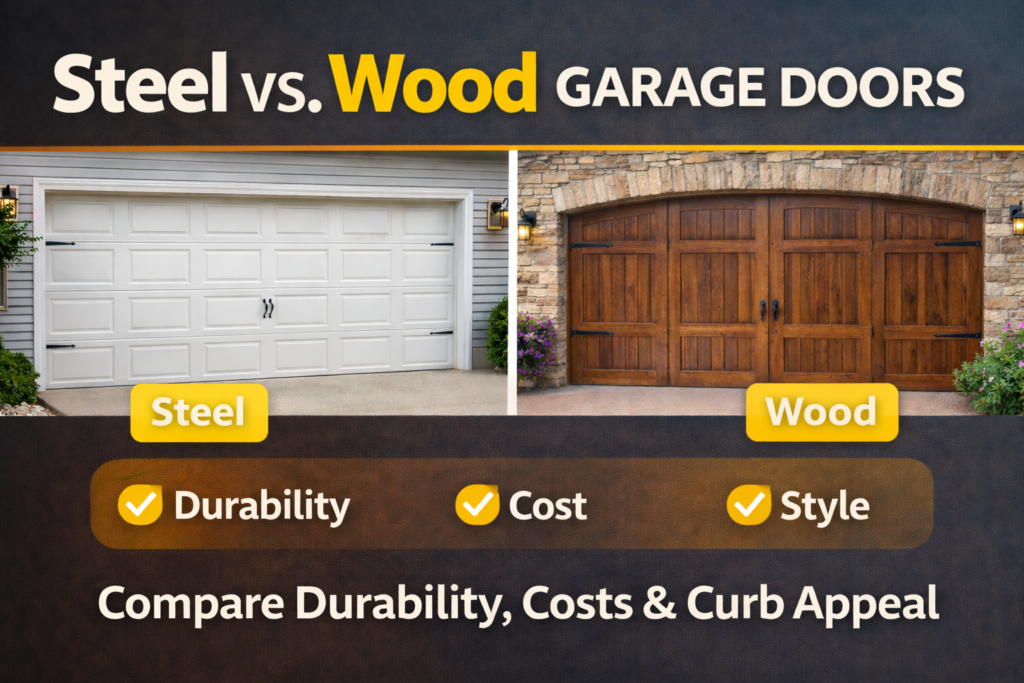
Choosing the Right Garage Door is one of the most important decisions homeowners make when upgrading their property. Your garage door affects curb appeal, insulation, maintenance needs, and long-term costs. Among the most popular options are steel and wood garage doors. Each material offers unique advantages, and understanding the differences helps you make the best choice for your home.
Whether you’re planning a new installation or replacing an outdated system, comparing durability, cost, and design will guide you toward a smart investment.
Contents
Durability: Strength vs. Natural Beauty
Durability is often the first factor homeowners consider. Steel garage doors are known for their strength and resistance to harsh conditions. They do not crack, warp, or rot, making them highly reliable in changing weather environments. Modern steel doors are often coated with protective finishes that resist rust and corrosion.
Wood garage doors, on the other hand, offer natural beauty but require more attention. Wood is susceptible to moisture damage, expansion, and contraction due to temperature changes. Without proper sealing and regular Garage Door Maintenance, wooden doors may develop warping or surface cracks over time.
If long-term structural resilience is your priority, steel generally offers greater durability with less upkeep.
Maintenance Requirements
Maintenance plays a significant role in long-term performance. Steel doors typically require minimal care beyond occasional cleaning and inspection. Lubricating moving parts and scheduling periodic Garage Door Service ensures the system operates smoothly.
Wood garage doors demand more consistent attention. Regular staining or painting is necessary to protect against moisture and UV damage. Neglecting maintenance can shorten the lifespan of a wooden door and lead to higher repair costs.
Homeowners seeking low-maintenance solutions often prefer steel for convenience and cost efficiency.
Cost Comparison
Cost varies depending on design, insulation, and customization. Steel garage doors are generally more affordable upfront, making them a practical option for budget-conscious homeowners. Their durability also helps reduce long-term expenses related to repairs and refinishing.
Wood garage doors tend to have a higher initial cost due to materials and craftsmanship. Custom wood designs further increase the investment. However, many homeowners feel the aesthetic appeal justifies the expense.
When evaluating total cost, it’s important to consider not just installation but also future maintenance and potential Garage Door Repair needs.
Style and Curb Appeal
Style is where wood garage doors truly stand out. The natural grain, texture, and warm appearance of real wood create a classic and upscale look. Custom finishes and unique panel designs enhance architectural charm.
Steel doors have evolved significantly in design. Modern manufacturing allows steel doors to mimic wood textures while maintaining durability. Homeowners can choose from a wide range of colors, panel styles, and decorative hardware to match their home’s exterior.
If visual impact and traditional aesthetics are your main focus, wood offers unmatched authenticity. However, steel provides versatile design options with added durability.
Insulation and Energy Efficiency
Both steel and wood doors can be insulated for improved energy efficiency. Insulated steel doors often include foam cores that enhance temperature control and reduce noise. This is especially beneficial for attached garages or spaces used as workshops.
Wood naturally provides some insulation but may require additional materials for optimal performance. Energy efficiency contributes to indoor comfort and can lower utility costs over time.
Proper insulation also reduces strain on garage door components by stabilizing internal temperatures.
Longevity and Environmental Factors
Environmental conditions significantly influence performance. High humidity can accelerate wear on wooden doors if they are not properly sealed. As discussed in How Humidity Affects Your Garage, moisture can impact both structural components and mechanical systems.
Steel doors are generally more resistant to environmental stress but may develop surface rust if protective coatings are damaged. Regular inspections and timely Garage Door Maintenance extend the lifespan of either material.
Choosing the right door often depends on climate and exposure to elements.
Security Considerations
Both materials provide reliable security when installed correctly. Steel doors are inherently strong and resistant to impact. Wood doors can also offer solid protection but may require reinforced cores for added strength.
Pairing your door with modern locking systems or Smart Garage Door Openers in 2026 enhances overall security and convenience. Upgrading both material and technology improves home protection.
Which Option Is Right for You?
The decision between steel and wood comes down to priorities. If you value durability, lower maintenance, and affordability, steel is often the better choice. If you prefer natural beauty, classic charm, and custom craftsmanship, wood may be worth the additional care and investment.
Consulting with experienced professionals ensures accurate sizing, proper installation, and balanced performance. Expert installation reduces the risk of future Garage Door Repair issues and maximizes long-term reliability.
Steel and wood garage doors both offer unique benefits. Steel delivers strength, affordability, and low maintenance, while wood provides timeless beauty and premium aesthetics. By comparing durability, cost, and style, homeowners can choose the material that best fits their needs and lifestyle.
Regular Garage Door Torsion Springs and proper upkeep ensure whichever option you select continues to perform safely and efficiently for years to come.