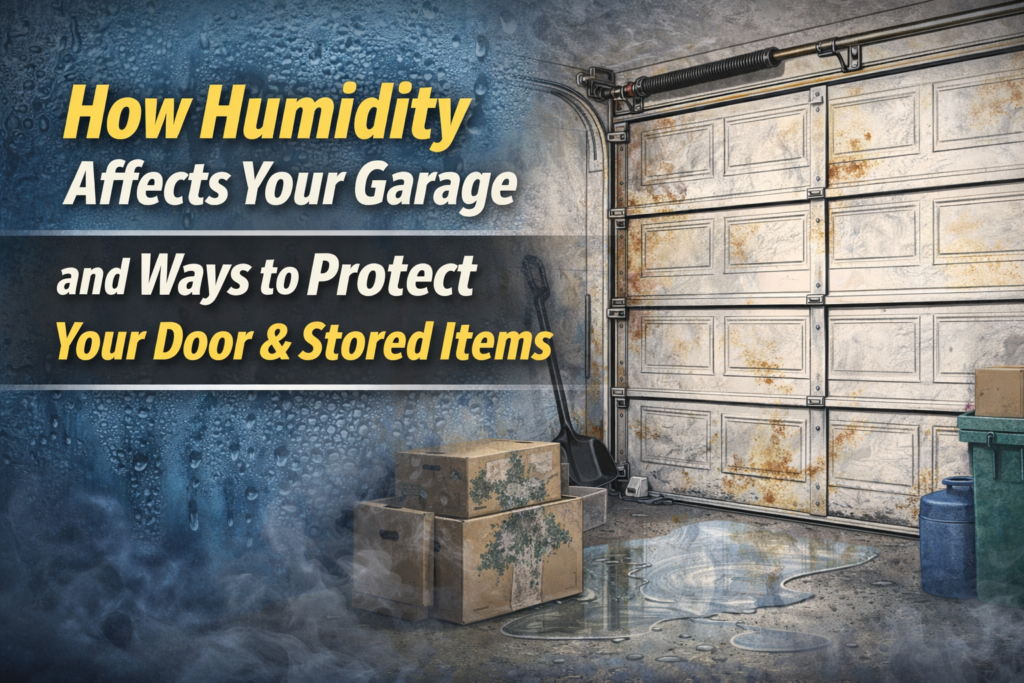
Humidity is one of the most overlooked factors that can damage your garage and everything inside it. While many homeowners focus on mechanical issues like springs or Smart Garage Door Openers in 2026, moisture in the air can quietly cause rust, warping, mold growth, and long-term structural problems. Understanding how humidity affects your garage helps you take preventive action before expensive repairs become necessary.
Excess moisture is a common reason homeowners eventually need Garage Door Repair OKC. Preventing humidity damage not only protects your garage door but also extends the lifespan of stored belongings and internal components.
Contents
- 1 Why Humidity Is a Problem in Garages
- 1.1 Rust and Corrosion on Metal Components
- 1.2 Warping and Damage to Garage Doors
- 1.3 Mold, Mildew, and Stored Items
- 1.4 How to Reduce Humidity in Your Garage
- 1.5 Insulation and Moisture Barriers
- 1.6 Regular Maintenance for Humidity Protection
- 1.7 Protecting Stored Items
- 1.8 Long-Term Benefits of Moisture Control
Why Humidity Is a Problem in Garages
Garages are often less insulated and less climate-controlled than the rest of the home. This makes them highly vulnerable to temperature fluctuations and moisture buildup. When warm air meets cooler surfaces, condensation forms. Over time, this repeated exposure to moisture creates ideal conditions for corrosion and deterioration.
Metal parts such as springs, hinges, tracks, and rollers are particularly sensitive to humidity. Wooden doors or storage shelving may swell or warp. Cardboard boxes and stored items can absorb moisture, leading to mold or mildew growth.
If left unaddressed, humidity-related damage can compromise both functionality and safety.
Rust and Corrosion on Metal Components
Garage door systems rely heavily on metal components. Springs, cables, brackets, and tracks must remain strong and structurally sound to support the weight of the door. When exposed to prolonged humidity, these parts can develop rust.
Rust weakens metal over time, increasing the risk of sudden failures. Corroded springs may snap, cables can fray, and rollers may stop moving smoothly. These issues often lead to unexpected service calls for Garage Door Service.
Regular inspections help detect early signs of rust so components can be cleaned, treated, or replaced before they fail. Also learn about Torsion vs. Extension Garage Door Springs
Warping and Damage to Garage Doors
Wood garage doors are especially vulnerable to humidity. Moisture absorption causes wood to expand, warp, or crack. This affects door alignment and may prevent smooth operation.
Even steel doors can suffer from moisture damage if protective coatings are compromised. Prolonged exposure can lead to surface rust and weakened panels.
Maintaining proper sealing and protective finishes helps preserve the structural integrity of your garage door.
Mold, Mildew, and Stored Items
Humidity does not just affect the door system itself. Garages often serve as storage spaces for tools, seasonal decorations, furniture, and household supplies. Excess moisture creates the perfect environment for mold and mildew growth.
Cardboard boxes, fabrics, and wooden items are especially vulnerable. Mold not only damages belongings but can also create unpleasant odors and health concerns.
Keeping your garage dry protects both your property and indoor air quality.
How to Reduce Humidity in Your Garage
One of the most effective ways to manage humidity is improving ventilation. Proper airflow prevents moisture from settling on surfaces. Installing vents or using exhaust fans helps circulate air and reduce condensation buildup.
Dehumidifiers are another powerful solution. These devices remove excess moisture from the air and maintain balanced humidity levels. For garages that experience consistent dampness, a dedicated dehumidifier can significantly reduce long-term damage risks.
Sealing cracks and gaps around doors and windows also prevents humid air from entering. Weather stripping at the base of the garage door plays a key role in keeping moisture out.
Insulation and Moisture Barriers
Insulated garage doors help regulate temperature differences that cause condensation. By reducing extreme fluctuations, insulation minimizes moisture formation on door panels and metal components.
Adding moisture barriers to walls or floors can further protect the space. These barriers limit water vapor penetration and help maintain stable indoor conditions.
Upgrading to an insulated system often reduces the likelihood of recurring Garage Door Repair caused by rusted or weakened components.
Regular Maintenance for Humidity Protection
Routine maintenance is essential in humid environments. Lubricating metal components prevents friction and creates a protective layer against moisture. Applying rust-resistant coatings to springs and hardware can slow corrosion.
Periodic professional inspections ensure early detection of moisture-related damage. Small signs of rust or wear can be addressed before they escalate into costly breakdowns.
Working with experienced technicians from Fix It Fast Garage Doors ensures your garage door system remains protected from environmental stress.
Protecting Stored Items
To safeguard your belongings, avoid placing boxes directly on concrete floors where moisture tends to accumulate. Use shelving units to elevate items and allow air circulation underneath.
Plastic storage bins offer better protection than cardboard containers. Moisture-absorbing products can also help maintain a dry storage environment.
Simple adjustments in organization and storage habits can significantly reduce humidity damage.
Long-Term Benefits of Moisture Control
Controlling humidity improves the lifespan of your Garage Door Maintenance, reduces mechanical failures, and preserves stored items. Preventive measures cost far less than replacing rusted springs, warped panels, or damaged belongings.
By addressing moisture issues early and scheduling regular Garage Door Service OKC when needed, homeowners can maintain a safer and more reliable system year-round.
If humidity has already started affecting your garage door’s performance, professional assistance from Fix It Fast Garage Doors can help restore proper function and prevent further damage.
Taking proactive steps today ensures your garage remains dry, secure, and structurally sound for years to come.