Garage door springs are the backbone of your entire garage door system. Without properly functioning springs, even the most advanced opener cannot safely lift or lower the door. Many homeowners focus on panels or motors, but springs handle the majority of the heavy lifting. Understanding their types, functions, and maintenance needs can help prevent sudden breakdowns and costly repairs.
For homeowners researching Garage Doors , learning about spring systems is essential to maintaining safety and long-term performance.
How Garage Door Springs Work
Garage doors are much heavier than they appear. Springs counterbalance this weight by storing and releasing mechanical energy. When the door closes, the springs build tension. When the door opens, that stored tension helps lift the door smoothly and evenly.
Without this counterbalance system, the opener would carry the entire weight of the door, leading to rapid wear and frequent service calls for Garage Door Repair . Springs reduce strain on the motor and improve overall system efficiency.
Torsion vs. Extension Garage Door Springs
There are two primary types of springs used in residential systems: torsion and extension.
Torsion Springs
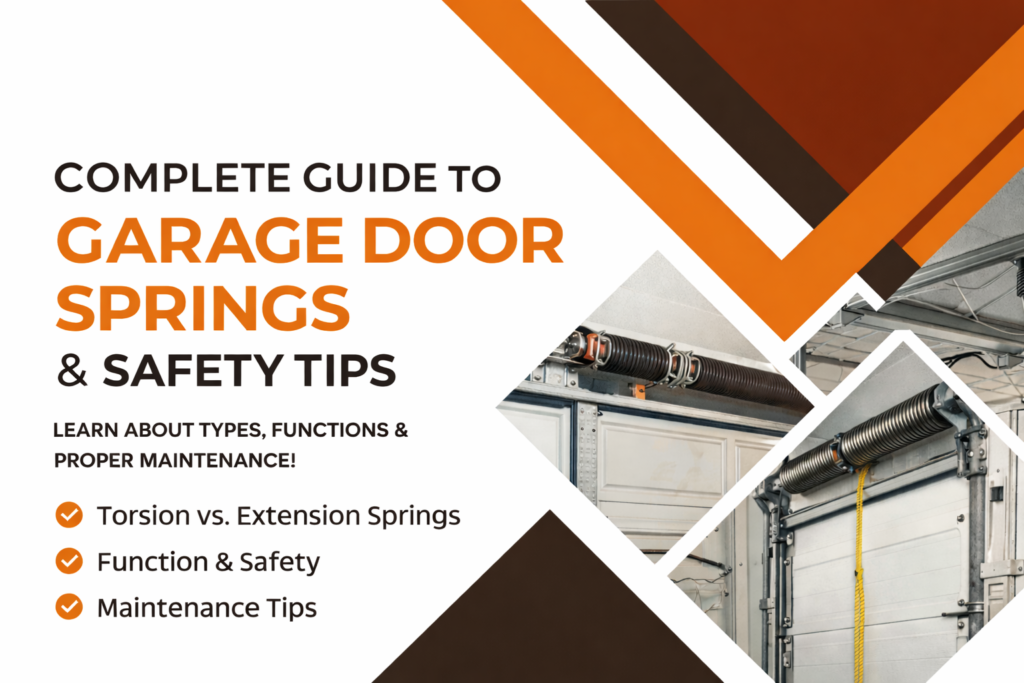
Torsion springs are mounted horizontally above the garage door opening. They twist to store energy and unwind in a controlled manner when the door lifts. This design provides smoother movement, better balance, and longer lifespan. Torsion systems are generally quieter and more durable.
Extension Springs
Extension springs are installed on both sides of the door along the horizontal tracks. They stretch and contract to lift the door. While typically more affordable upfront, they may require more frequent adjustments and can create more vibration.
When comparing Torsion vs. Extension Garage Door Springs, torsion systems are often preferred for durability and safety. However, the right choice depends on your garage door size, usage frequency, and long-term goals.
Signs Your Garage Door Springs Need Attention
Springs do not last forever. Most are rated for a certain number of cycles, meaning one full open-and-close action counts as a single cycle. Over time, metal fatigue weakens the spring.
Common warning signs include:
- The door feels unusually heavy
- Uneven or jerky movement
- Loud snapping or popping sounds
- Gaps visible in the spring coil
Ignoring these signs often leads to emergency Garage Door Service when the spring breaks unexpectedly. Early detection prevents further system damage.
The Importance of Garage Door Maintenance
Regular Garage Door Maintenance extends the lifespan of your springs and other mechanical components. Lubricating springs reduces friction and slows corrosion. Checking balance ensures the system remains properly aligned.
Humidity and environmental conditions also play a major role in spring longevity. As discussed in How Humidity Affects Your Garage, moisture buildup can cause rust, which weakens metal components over time. Controlling humidity levels and maintaining proper ventilation helps preserve spring integrity.
Preventive maintenance costs far less than replacing broken components.
Safety Tips for Handling Garage Door Springs
Garage door springs operate under extreme tension. Attempting DIY repairs without proper tools and expertise can result in serious injury. Springs can snap suddenly and release stored energy with force.
Safety guidelines include:
- Never attempt to adjust torsion springs without professional training
- Avoid loosening hardware connected to high-tension components
- Disconnect power before inspecting mechanical parts
- Schedule professional inspections annually
Professional technicians have specialized tools to safely adjust and replace springs. Working with experienced experts ensures both safety and proper calibration.
How Springs Affect Smart Technology
Modern advancements like Smart Garage Door Openers in 2026 improve convenience and control, but even the most advanced opener depends on well-balanced springs. A smart opener cannot compensate for worn or broken springs.
If your door struggles to lift or the opener strains excessively, the issue may not be the motor but the spring system. Maintaining healthy springs ensures your smart technology performs efficiently and lasts longer.
Environmental Factors That Impact Spring Lifespan
Temperature fluctuations and moisture levels significantly influence spring durability. High humidity accelerates rust formation, while extreme heat or cold can weaken metal over time.
As covered in How Humidity Affects Your Garage, proper sealing, insulation, and ventilation reduce environmental stress on garage door components. Investing in these preventive measures helps avoid frequent Garage Door Repair calls.
When to Replace Garage Door Springs
Spring replacement is not just about fixing a broken part—it is about restoring system balance. Replacing both springs at the same time is often recommended, even if only one has failed, since they typically wear at similar rates.
Delaying replacement can strain cables, rollers, and openers, increasing overall repair costs. Prompt service ensures smooth operation and prevents additional damage.
Professional Care for Long-Term Reliability
Your garage door operates multiple times daily, making spring health critical for safety and performance. Professional inspections identify early signs of wear and ensure proper tension adjustment.
Choosing reliable service providers like Fix It Fast Garage Doors ensures that spring replacement, system balancing, and inspections are handled safely and accurately. Expert care protects your investment and keeps your garage operating smoothly.
Garage door springs may seem like small components, but they carry the weight of your entire system. Understanding the differences in Torsion vs. Extension Garage Door Springs, maintaining proper balance, controlling humidity, and scheduling regular service all contribute to long-term reliability.
Whether you are upgrading to modern systems, performing routine Garage Door Maintenance, or addressing signs of wear, professional support helps prevent costly breakdowns. A well-maintained spring system keeps your garage door safe, efficient, and dependable for years to come.