Garage door systems rely heavily on springs to function properly. These springs carry the weight of the door and make it possible to open and close smoothly with minimal effort. When it comes to garage door springs, there are two main types: torsion springs and extension springs. Understanding the difference between these two systems is essential for homeowners who want to maintain safety, performance, and long-term reliability. Knowing when to schedule Garage Door Service or seek professional Garage Door Repair can prevent unexpected issues and costly breakdowns.
Contents
What Are Torsion Springs?
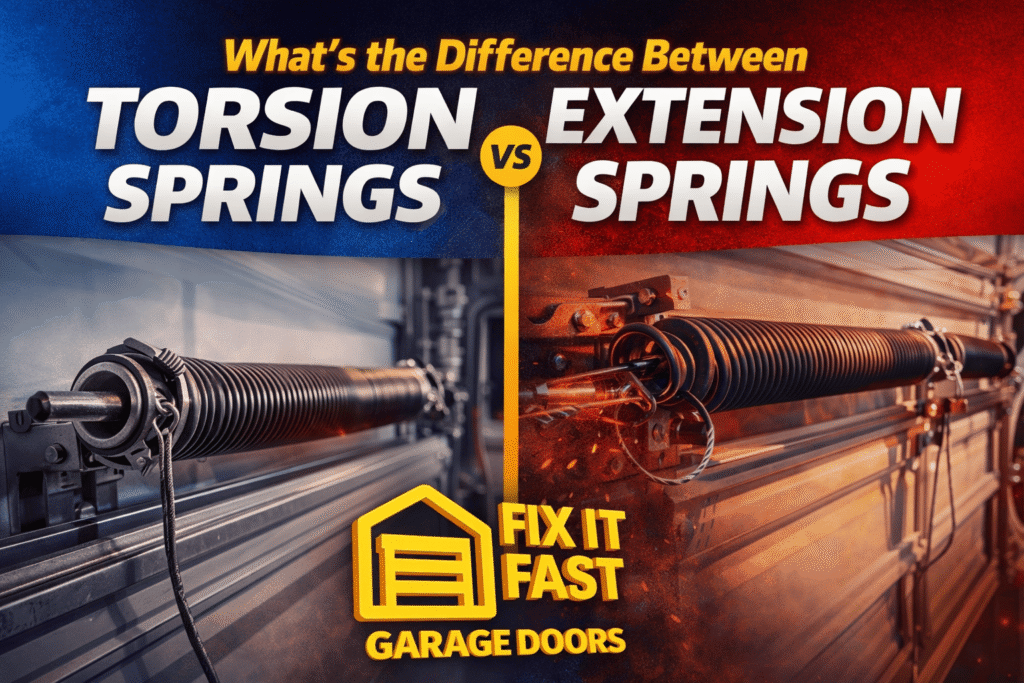
Torsion springs are typically mounted horizontally above the garage door opening. They work by twisting and storing energy when the door closes, then releasing that energy to help lift the door when it opens. This twisting motion creates controlled and balanced movement, which is why torsion springs are often considered the more advanced and reliable option.
One of the key advantages of torsion springs is their durability. They are designed to handle heavy loads and provide smoother operation compared to other spring systems. Because of their controlled movement, they also reduce strain on other garage door components, including the Garage Door Openers 2026. Regular Garage Door Repair ensures that torsion springs remain properly lubricated and balanced for optimal performance.
What Are Extension Springs?
Extension springs are usually installed on both sides of the garage door, running parallel to the horizontal tracks. These springs stretch and contract as the door moves, storing energy when extended and releasing it to lift the door.
While extension springs are often more affordable and commonly found in older garage door systems, they come with certain limitations. They tend to wear out faster than torsion springs and may not provide the same level of smooth operation. Because they stretch under tension, they can also pose a safety risk if they break, as they may snap or fly loose without proper safety cables in place.
Key Differences Between Torsion and Extension Springs
The main difference between Torsion vs. Extension Garage Door Springs lies in how they operate. Torsion springs use a twisting motion to lift the door, while extension springs rely on stretching. This difference affects not only performance but also safety and longevity.
Torsion springs offer more controlled and balanced movement, making them ideal for modern garage doors. They typically last longer and require less frequent replacement. On the other hand, extension springs are simpler in design but may lead to uneven door movement and increased wear on other components over time.
Another important distinction is safety. Torsion springs are mounted securely and are less likely to cause injury if they fail. Extension springs, however, can become hazardous if they snap without proper containment. This is why professional Garage Door Maintenance is strongly recommended when dealing with any type of spring issue.
Which Option Is Better for Your Garage Door?
Choosing between torsion and extension springs depends on your garage door system, budget, and performance expectations. Torsion springs are generally preferred for their durability, smoother operation, and enhanced safety. They are commonly used in newer garage door installations and are considered a long-term investment.
Extension springs may still be suitable for certain applications, especially in older systems or where budget constraints are a factor. However, they often require more frequent maintenance and replacement. Scheduling regular Garage Door Service can help extend their lifespan and ensure safe operation.
Maintenance and Lifespan Considerations
Both types of springs require regular maintenance to perform effectively. Lubrication, balance checks, and visual inspections are essential for identifying signs of wear. Over time, springs lose tension and may develop cracks or rust, which can lead to sudden failure.
Torsion springs typically have a longer lifespan, often lasting several years with proper care. Extension springs, due to their stretching mechanism, may need replacement sooner. Regardless of the type, timely Garage Door Repair is crucial when signs of damage appear.
Safety and Professional Assistance
Working with garage door springs can be dangerous due to the high tension they carry. Attempting to repair or replace them without proper tools and knowledge can result in serious injury. This applies to both torsion and extension springs.
Professionals at Fix It Fast Garage Doors are trained to handle these systems safely and efficiently. They can assess your garage door, recommend the best spring type, and perform repairs or replacements with precision. Relying on expert Garage Door Service ensures that your system remains secure and operates smoothly.
Understanding the difference between torsion and extension springs helps homeowners make informed decisions about their garage door systems. While both types serve the same purpose, their design, performance, and safety features vary significantly.
If your garage door is showing signs of spring wear or imbalance, it’s important to act quickly. Professional Garage Door Repair and routine maintenance can extend the life of your system and prevent unexpected failures. With the right care and attention, your garage door will continue to operate efficiently and safely for years to come.