Garage door springs are one of the most hardworking components in your entire garage door system. Every time your door opens and closes, the springs handle the heavy lifting. While they are built for durability, they do not last forever. Understanding how long garage door springs typically last — and recognizing the signs of failure — can help you avoid sudden breakdowns and expensive repairs.
Many Emergency Garage Door Repair calls happen because homeowners were unaware their springs were nearing the end of their lifespan.
Contents
Average Lifespan of Garage Door Springs
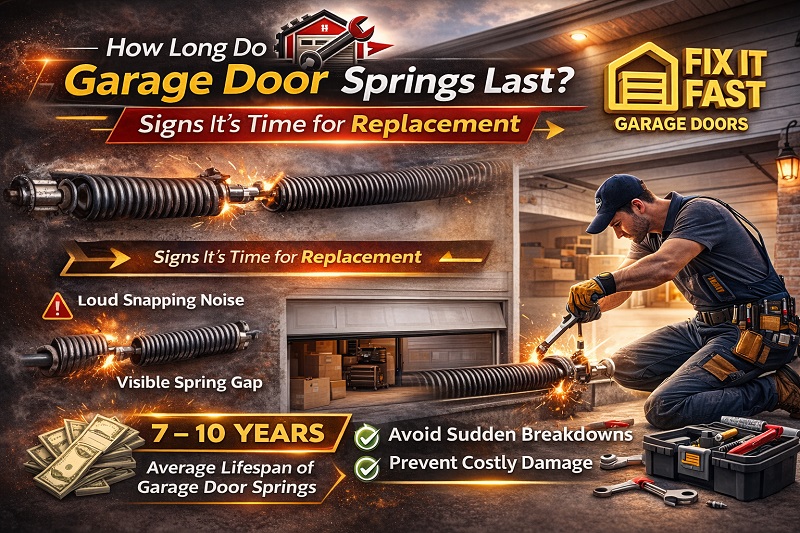
Garage door springs are rated by cycles. One cycle equals one full opening and closing of the door. Standard torsion and extension springs are typically rated for about 10,000 cycles.
For an average household using the garage door 3–5 times per day, this usually translates to 7–10 years of use. However, heavy daily usage can significantly shorten this timeframe.
High-cycle springs are available and may last 20,000 cycles or more, making them a worthwhile investment for busy households.
Factors That Affect Spring Longevity
Several factors influence how long your springs will last:
1. Frequency of Use
The more frequently your garage door operates, the faster the springs wear out. Homes where the garage serves as the primary entrance tend to experience quicker spring fatigue.
2. Climate and Humidity
Moisture can accelerate rust formation, weakening the metal over time. As explained in How Humidity Affects Your Garage, excess moisture significantly reduces spring durability if not properly managed.
3. Maintenance Routine
Regular lubrication and inspections through Garage Door Maintenance help reduce friction and corrosion. Well-maintained springs often last longer than neglected ones.
4. Spring Type
When comparing Torsion vs. Extension Garage Door Springs, torsion springs generally last longer due to smoother operation and balanced tension.
Warning Signs Your Springs Are Failing
Garage Door Springs rarely fail without warning. Recognizing early signs can prevent dangerous situations.
Loud Snapping Noise
If you hear a sudden loud bang from the garage, a spring may have broken. The sound occurs when the tightly wound metal suddenly releases tension.
Door Feels Heavy
If the door becomes difficult to lift manually, the springs may be losing strength.
Uneven or Jerky Movement
A door that lifts unevenly or appears crooked may indicate one spring has failed while the other remains intact.
Visible Gap in the Spring
Torsion Springs often show a noticeable separation when broken. This gap is a clear visual indicator of failure.
Opener Straining
If your opener struggles or stops midway, the springs may no longer be supporting the door’s weight properly.
Ignoring these signs often leads to urgent Garage Door Service needs.
Why Prompt Replacement Is Important
Driving or operating a garage door with worn-out springs can strain other components, including cables, rollers, and the Opener motor. Continued operation increases the risk of additional damage and higher repair costs.
More importantly, broken springs can pose serious safety risks. Because they operate under high tension, attempting DIY replacement can result in injury.
Professional technicians have specialized tools to safely remove and install new springs while ensuring correct balance and tension.
Should You Replace Both Springs at Once?
In most cases, yes. Garage doors with two springs experience similar wear on both sides. If one breaks, the other is usually close to failing.
Replacing both springs simultaneously ensures balanced operation and reduces the likelihood of another service call in the near future.
How to Extend the Life of Your Springs
You can maximize spring lifespan by:
- Lubricating springs every few months
- Scheduling annual Garage Door Maintenance inspections
- Keeping humidity levels controlled
- Avoiding unnecessary door cycles
Upgrading to high-cycle springs during replacement can also provide longer-lasting performance.
On average, garage door springs last between 7 and 10 years, depending on usage and maintenance. However, heavy daily operation, poor maintenance, and environmental factors can shorten that lifespan.
Recognizing early warning signs — such as loud noises, uneven movement, or heavy lifting — allows you to schedule Garage Door Repair before complete failure occurs.
Timely professional replacement ensures safe operation, protects other components, and restores smooth performance. Taking preventive action today can save you from unexpected breakdowns tomorrow.